CroRIS: Digital Literacy Assessment in Individuals with Hearing Impairment (DigipiS)
Principal Investigator: Assis. Prof. Marina Olujić Tomazin, PhD

CroRIS: Digital Literacy Assessment in Individuals with Hearing Impairment (DigipiS)
Principal Investigator: Assis. Prof. Marina Olujić Tomazin, PhD
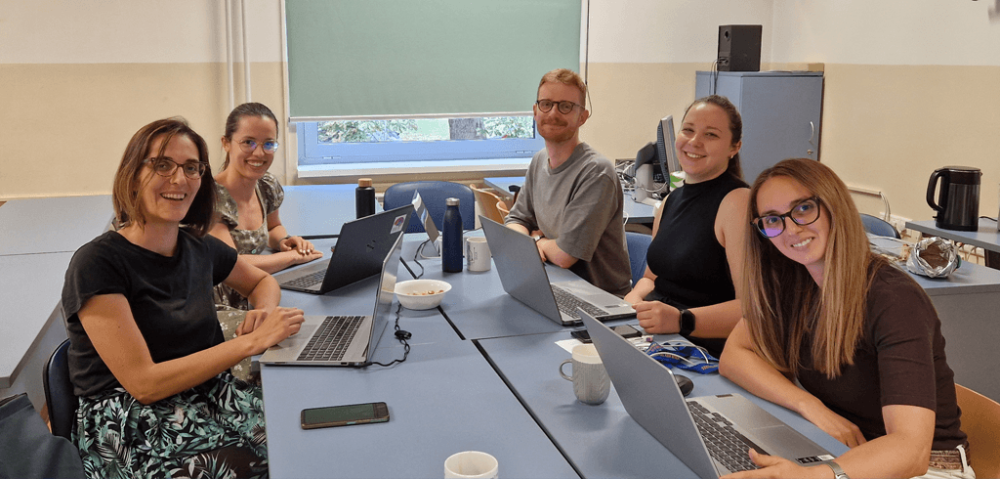
Project team members:
Associates:
The project focuses on examining the level of literacy (reading and writing), as well as linguistic and non-linguistic predictors of these skills, in upper primary school children, secondary school students, and adults with prelingual hearing impairment in the Republic of Croatia. International research shows that, on average, prelingually deaf individuals achieve significantly lower literacy results than their hearing peers, which limits their educational, professional, and social opportunities. In Croatia, systematic and empirically grounded research on this topic is extremely scarce, making it difficult to develop effective educational and rehabilitation strategies. The main goal of the project is to examine literacy levels and their linguistic and non-linguistic predictors. The specific objectives are to: (1) establish a database (registry) of contacts and information on individuals with prelingual hearing impairment and professionals working with them, (2) develop and validate online tasks for assessing literacy levels and their predictors, and (3) conduct digital testing with target and control groups. All tasks will be adapted for online implementation, ensuring broader participant reach, logistical efficiency, and modern applicability in scientific and professional contexts. For the first time in Croatia, the linguistic and non-linguistic predictors of reading and writing, as well as literacy levels among individuals with prelingual hearing impairment, will be examined in detail across developmental stages (from childhood to adulthood), providing insight into developmental patterns and differences compared to the hearing population. The project introduces innovations in the development and validation of tasks for assessing language and literacy skills adapted for use through a digital research platform, which have potential for practical application. It will also establish a registry of individuals with prelingual hearing impairment and professionals, and organize training for professionals in the digital application of assessment tasks. In the long term, the project may contribute to reducing educational inequality and strengthening the social inclusion of individuals with hearing impairment.
The scientific contribution of this project is reflected in the establishment of a systematic, interdisciplinary framework for understanding literacy in deaf and hard-of-hearing individuals in the Croatian-speaking area. For the first time in the domestic context, the project provides an in-depth insight into the developmental patterns of reading and writing across different stages of life, from childhood to adulthood. By identifying key linguistic and non-linguistic predictors of literacy, the research contributes to contemporary knowledge of cognitive and linguistic processes involved in literacy skills that are specific to this population. A particular scientific contribution is represented by the development and validation of innovative digital instruments that are methodologically adapted to the visual and communicative needs of individuals with hearing loss.
The professional contribution encompasses the creation of the first national database (registry) that connects clients with hearing loss and professionals, thereby establishing a lasting infrastructure for future research and clinical work. Practical resources in the form of online tasks will become available to professionals, enabling more objective and efficient assessment of clients' skills. The digitalization of testing can significantly reduce logistical barriers to accessing hard-to-reach groups across the country. Through the organization of training sessions for professionals, the direct transfer of the latest scientific knowledge into everyday speech-language therapy and educational practice is ensured. In the long term, the results of the project's research will contribute to shaping evidence-based guidelines for teaching literacy skills to individuals with hearing loss, directly addressing the problem of literacy level stagnation from the upper primary school to adulthood.