CroRIS: Characteristics of Students' Visual Functioning: Implications for Daily Life and Education
Principal Investigator: Assoc. Prof. Sonja Alimović, PhD

CroRIS: Characteristics of Students' Visual Functioning: Implications for Daily Life and Education
Principal Investigator: Assoc. Prof. Sonja Alimović, PhD
Project team members:
Associates:
Currently, there is a growing problem of myopia and issues with visual functioning, particularly cerebral visual impairment, in various everyday and school situations. In developed countries, more than 3% of students experience problems with visual functioning (Williams et al. 2021). Milder visual impairments and specific visual functioning difficulties often go unrecognised, affecting development, learning, social inclusion, and independence. It is therefore important to identify these issues promptly to ensure appropriate adaptation of materials and environments, as well as timely visual rehabilitation. In this project, by analysing the characteristics of visual functioning in school-age children, we aim to contribute to the further development of scientifically based methods for planning and organising screening and adaptation in the educational process and other aspects of life. The results of our research on visual functioning will provide data on the frequency of specific problems related to individual visual functions and the visual functioning of school-age students by type of cerebral visual impairment. We will also help raise awareness and define the relationship between visual functioning problems and academic success, as well as other areas such as socialisation, social inclusion, leisure activities, and the level of support required in different activities. Furthermore, these data will form a basis for new research in the field of visual functioning in children, particularly in the area of functional vision (use of vision in different situations according to the guidelines of the International Classification of Functioning, Disability and Health, ICF 2010), by establishing developmental norms for individual visual functions.
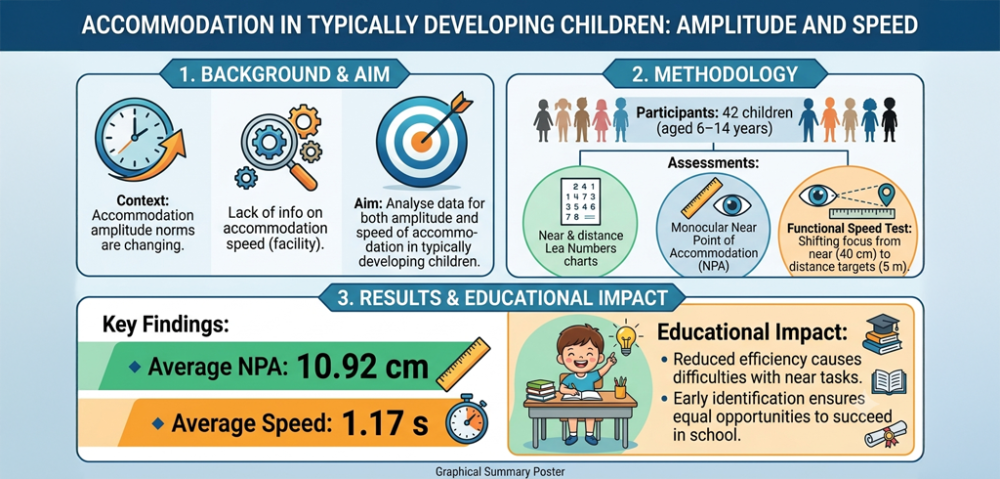
The results of this study will provide insight into the characteristics, type and frequency of visual functioning (VF) problems in students and their connection with functioning in age-appropriate activities. By including a new method of assessing VF, with an emphasis on the analysis of the speed of accommodation and its impact on school performance (e.g. copying from the board), the study will contribute to the development of more precise diagnostic and functional approaches. Furthermore, the planned study brings a new approach to understanding cerebral visual impairment (CVI) in students with typical cognitive and motor development, who have often been neglected in the literature to date in relation to children with neurodevelopmental disorders. This way, CVI is viewed through a functional, rather than exclusively diagnostic, prism. By linking VF with academic success, social inclusion, necessary support and spending free time, the study will offer a more comprehensive, previously unrepresented, insight into children's everyday functioning in the context of VF characteristics. Additionally, studying age differences within the school population will contribute to a better understanding of the developmental course of VF during childhood and adolescence. In addition, the research will contribute to faster recognition of VF difficulties and better adaptation of materials and the environment to the needs of these children.