Principal investigator: Prof. Martina Ferić, PhD

Principal investigator: Prof. Martina Ferić, PhD
Project team members:
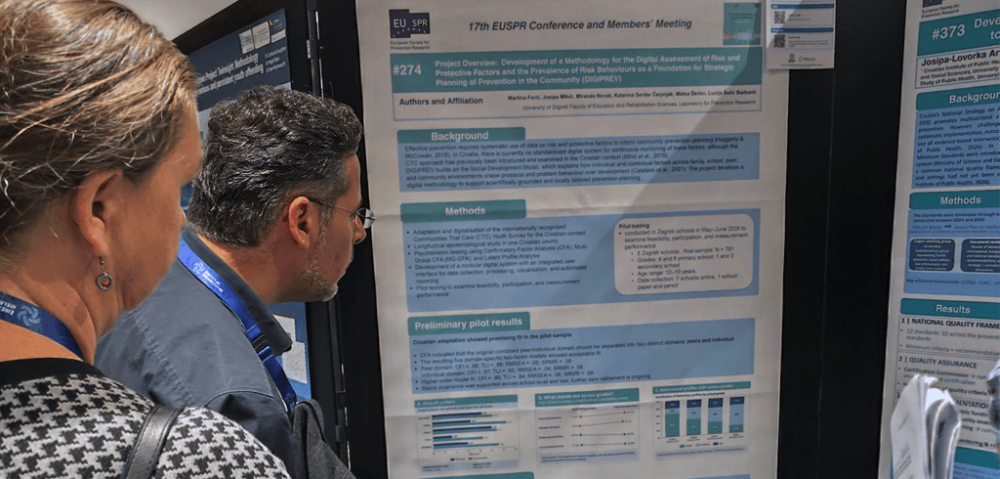
The purpose of the project is to strengthen evidence-based planning of preventive strategies in the community by empirically testing the theoretical social development model and developing and validating a digital methodology for the systematic assessment of protective and risk factors associated with the development of behavioural problems in children and youth. In Croatia, there is currently no systematic data collection on these factors, which the project aims to address. Effective prevention relies on timely intervention in factors influencing developmental outcomes in youth – before the onset of risk behaviours or problems – which the project operationalises through a scientific approach and digital solutions. The project introduces several innovations: the first digital version of the internationally recognised CTC Questionnaire for children and youth, adapted to the Croatian context, is being developed, enabling rapid, standardised, and scalable data collection. By applying advanced statistical methods (CFA, MG-CFA, latent profile analysis), a deeper understanding of developmental dynamics and the local context of factors affecting children’s and youth’s outcomes will be achieved. Automated generation of scientifically grounded local profiles further enhances the practical applicability of the results. The digital system will be modular and adaptable to different communities while maintaining psychometric validity. For the first time in Croatia, a digital user interface (DUI) is being developed for longitudinal monitoring of factors and the prevalence of risk behaviours, as well as for the identification of latent youth profiles. A longitudinal epidemiological study in one county will serve as the basis for scientific validation of the model and tools. Interactive training and participatory activities with local decision-makers will facilitate knowledge transfer into practice and the development of evidence-based strategies, strengthening the connection between science and public policies and strategies. The project is implemented in partnership with Varaždin County and the Croatian Academic and Research Network – CAContribution
Scientific Contribution of the Project:
Professional Contribution of the Project: