Principal investigator: Prof. Renata Martinec, PhD

Principal investigator: Prof. Renata Martinec, PhD
Project team members:
Associates:
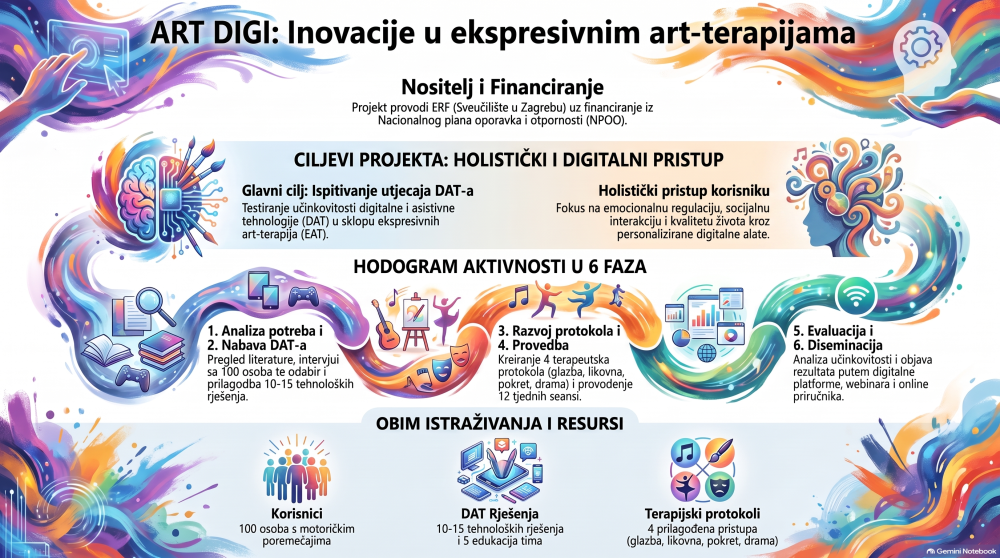
Supporting people with motor disorders requires a holistic, interdisciplinary approach that considers the complexity of their needs. Individuals with motor disorders often experience not only primary difficulties but also associated challenges, such as sensory, perceptual-motor, and speech-language impairments, which further reduce their functional abilities, emotional regulation, and quality of social interactions. In this context, expressive art-therapies – using music, visual arts, movement, dance, drama, and literary texts – offer a therapeutic approach that enables symbolic and creative expression of emotions, processing of traumatic experiences, identity development, and the strengthening of control and self-esteem. However, their effectiveness may be limited if therapeutic approaches are not adapted to the individual psychophysical limitations and needs of users. Therefore, the aim of this project is to examine the impact of digital and assistive technology on the effectiveness of expressive art-therapies for individuals with motor disorders, in accordance with their specific psychophysical functioning, psycho-emotional needs, and individual preferences for some artistic media. Project activities include analysing the psychosocial needs of users and the various applications of digital and assistive technologies; searching for, selecting, procuring, and adapting digital and assistive technologies; designing and implementing therapeutic protocols; evaluating outcomes; and disseminating results. In addition, practice-oriented recommendations are planned through the development of a website, a platform for searching for and acquiring digital and assistive equipment, online manuals, webinars, and workshops for users, professionals, and family members. Finally, the project aims to promote creative expression and digital literacy, encompassing a broader social dimension of empowerment and inclusion for people with motor disorders, and potentially for individuals with other types of disabilities.
This project contributes to developing an evidence-based, interdisciplinary model for integrating digital and assistive technologies into expressive art-therapies for individuals with motor disorders. Its particular value lies in systematically linking users’ psychosocial needs with the individualised selection and adaptation of digital tools, thereby increasing the accessibility and effectiveness of therapeutic interventions. The project will generate empirical insights into the impact of digital and assistive technologies on therapeutic outcomes, including emotional regulation, social interaction, sense of competence, and quality of life. The development and evaluation of structured therapeutic protocols will contribute to the standardisation and advancement of professional practice in educational and rehabilitation contexts. The creation of a digital platform and an online handbook will provide a sustainable and widely accessible source of validated information, reducing the gap between scientific knowledge and practical application. The project further strengthens methodological rigour and transparency through systematic digital documentation and outcome monitoring. By providing education and training for professionals, users, and family members, it promotes digital competence and empowerment among all stakeholders. Its broader societal value is reflected in fostering inclusion, creative expression, and active participation of individuals with motor disorders, with potential applicability of the model to other groups of persons with disabilities.