CroRIS: STIGMA CARE – Stigmatization of Children and Parents in the Alternative Care System in Croatia
Principal investigator: Prof. Ivana Borić, PhD

CroRIS: STIGMA CARE – Stigmatization of Children and Parents in the Alternative Care System in Croatia
Principal investigator: Prof. Ivana Borić, PhD
Project team members:
Associates:
The project explores the characteristics of the stigmatization of children and parents within the alternative care system in Croatia. Its objectives include analyzing stigmatization from multiple perspectives (users, professionals, decision-makers, peers, and the media), examining how experiences of stigmatization affect self-image, well-being, and social inclusion, analyzing relevant policies and practices, establishing an advisory group of young people with care experience, and developing guidelines to reduce stigmatization. The research applies a mixed-methods approach: a qualitative phase (focus groups and interviews) and a quantitative phase (surveys and policy analysis). It includes children aged 14 and above and parents who are users of the system, as well as peer children, professionals, decision-makers, individuals with care experience, and media representatives. Approximately 100 participants are expected in the qualitative phase and 320 in the quantitative phase. The scientific contribution lies in the development of research instruments, the application of a mixed-methods design, and the publication of results in relevant scientific databases (SCOPUS, WoS). The social contribution includes guidelines and promotional-educational materials aimed at reducing stigmatization. The project strengthens the institution’s research capacities by establishing a new research group, promoting a participatory approach, involving students, and creating a database for future research.

On 21 May 2026, the scientific research project STIGMA SKRB was presented to young people with care experience at the premises of the Igra Association.
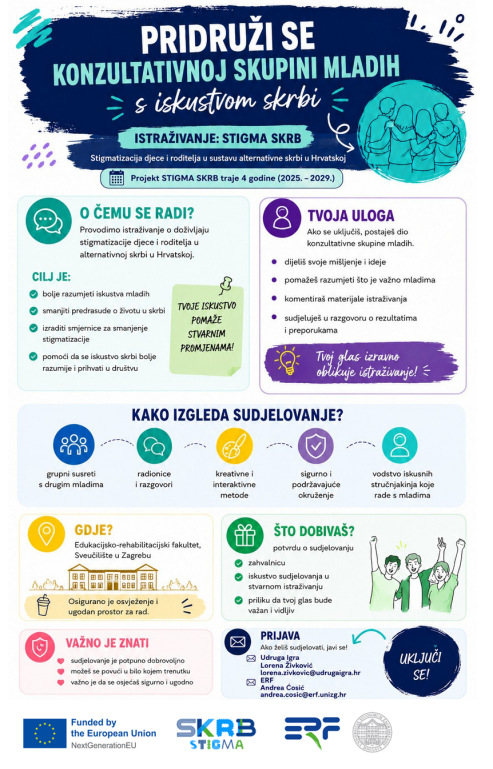
During the meeting, the young people were introduced to the project’s objectives and planned activities. Particular emphasis was placed on the opportunity to join the Youth Advisory Group, through which they will be able to actively participate in different stages of the research, share their experiences, views and ideas, provide feedback on research materials, and contribute to discussions on the research findings and recommendations.
The discussion highlighted the importance of young people’s lived experiences and perspectives in understanding stigmatization associated with living in alternative care.
The meeting also provided an opportunity to agree the next steps for involving young people in the Youth Advisory Group, as well as how they will collaborate throughout the implementation of the project. Their participation represents an important contribution to the research and to ensuring that the experiences and perspectives of young people with care experience are heard and taken into account when developing recommendations for reducing stigmatization and promoting a society that better understands and accepts the experience of living in care.
We would especially like to thank all the young people who have joined the Youth Advisory Group and who, by sharing their experiences, views and ideas, are contributing to the planning of the research and its outcomes.